Non-surgical Hemorrhoid Treatment
Non-Surgical Hemorrhoid Treatment
At Mountain Streams Medical, Dr. Scott Woody deeply understands the discomfort and distress that hemorrhoids can cause. These swollen blood vessels in the rectum or anus can significantly impede your daily life, sometimes even leading to bleeding. But with Dr. Woody’s vast experience and commitment to his patients, we’re proud to offer solutions that don’t always require surgical intervention.
Dr. Woody champions non-surgical treatments that are both gentle and effective. The approach at Mountain Streams Medical is holistic, focusing first on preventative techniques. Emphasizing healthy bowel movements, minimizing strain during these movements, and adopting habits like increasing fiber intake, staying well-hydrated, and avoiding prolonged sitting on the toilet can significantly alleviate symptoms and promote healing. Click Here to see actual before & after photos (Not Appropriate for Some Viewers)
What are the Symptoms of Hemorrhoids?
You may have hemorrhoids if you notice any of the following symptoms: bleeding during bowel movements, protrusion during bowel movements, itching in the anal area, pain, sensitive lump(s).
Internal hemorrhoids develop inside the anus. The most common symptoms are bleeding during bowel movements or protrusion through the anus upon straining. External hemorrhoids develop around the anus and can be very painful, especially if a blood clot develops within them. They can be felt as a firm lump around the anus.
For those looking for more immediate relief, there are several over-the-counter (OTC) medications available. These include ointments, creams, and suppositories, often containing ingredients like hydrocortisone or witch hazel. These provide temporary respite from itching, inflammation, and pain, and can be applied conveniently at home.
Moreover, at our state-of-the-art facility, Dr. Woody offers specialized in-office non-surgical treatments tailored to each patient’s unique condition. By combining preventative measures with targeted non-surgical treatments, we aim to deliver the best possible outcomes for our patients.
Rely on the expertise of Dr. Scott Woody and the dedicated team at Mountain Streams Medical. Our goal is to ensure you experience effective hemorrhoid relief without resorting to invasive painful surgeries.
Ways to Treat Hemorrhoids
In the past most people would simply tolerate hemorrhoids until they became so severe that surgery was required. Modern techniques have eliminated the need for surgery except in the most advanced cases. These techniques include rubber band ligation “Banding”, Scleroptherapy, and infrared coagulation “IRC”. Dr. Woody will quickly asses which non-surgical treatment will work best for you.
Why is Surgery Not the Answer?
Most patients agree that hemorrhoid surgery is one of the most painful surgeries – imagine having stitches in your anus. Don’t let pain and bleeding persist. Be proactive, and avoid the pain and extensive downtime of surgery. We will quickly determine the extent of the problem and get this taken care of with non-surgical hemorrhoid treatment.
Hemorrhoid Banding/Rubber Band Ligation
Hemorrhoids are a common issue, affecting nearly half of all adults before the age of 50. If you’re experiencing discomfort, rubber band ligation—also known as hemorrhoid banding—may be the solution you need.
What is Hemorrhoid Banding? 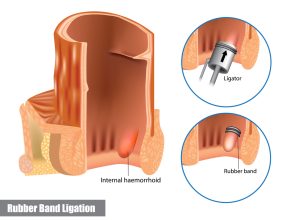
Rubber band ligation is a widely used non-surgical treatment for internal hemorrhoids, especially for grade 2 and grade 3 cases. During the procedure, a tiny rubber band (just a few millimeters wide) is placed around the base of the hemorrhoid. This cuts off its blood supply, causing it to shrink and fall off naturally—usually within a week.
Why Choose Hemorrhoid Banding?
- Quick & Effective: The procedure takes less than a minute to complete.
- Minimal Pain & Recovery: Most patients experience little to no discomfort and can return to daily activities right away.
- Non-Surgical & Safe:This in-office treatment eliminates the need for invasive surgery.
- Long-Lasting Results:The risk of recurrence or complications is very low.
- Affordable & Covered by Insurance: Banding is much more cost-effective than surgery and is covered by most insurance plans, including Medicare. Without insurance? Ask about cash pay rates.
At Mountain Streams Medical, most patients require just 3-4 visits for complete treatment, keeping the overall cost low. If you’re struggling with hemorrhoids, hemorrhoid banding could be the simple and effective relief you’ve been looking for.
Infrared Coagulation (IRC) 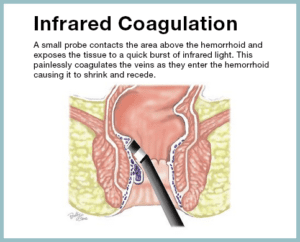
Infrared coagulation, also known as infrared photocoagulation, is a non-surgical treatment option for internal hemorrhoids. During the procedure, an infrared light is directed onto the base of the hemorrhoid, causing it to coagulate and shrink. The treatment is typically performed in an outpatient setting and does not require anesthesia. Infrared coagulation is effective for treating small to medium-sized internal hemorrhoids. Multiple sessions may be needed for complete resolution.
Sclerotherapy
- It is a non-surgical procedure
- It reduces blood supply t0 the hemorrhoid
- It is a treatment for grade 1 or grade 2 hemorrhoids
- Sclerotherapy may be used when other treatments fail
Sclerotherapy is an effective treatment, especially for small to medium-sized internal hemorrhoids. This procedure involves injecting a chemical solution, such as quinine, polidocanol, or zinc chloride, into the base of the hemorrhoid to shrink it over time.
How It Works 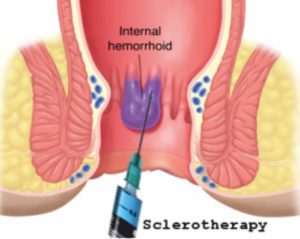
A proctoscope, a short tube with a light, is gently inserted into the anus to allow the doctor to see the hemorrhoidal tissue. With the help of the proctoscope, the doctor injects a liquid solution into the area around the hemorrhoid. This damages the blood vessels, reducing blood flow and causing the hemorrhoid to shrink and disappear.
After your treatment:
- Take a sitz bath (soaking in a tub) with Epsom salt for 20 minutes three or four times a day for the next 2 – 3 days.
- After you have a bowel movement, clean the area. Baby wipes work effectively.
- Eat a high fiber diet (fresh fruit, and vegetables). Continue this habit forever. Drink lots of fluids.
- No prolonged sitting after the procedure.
- Avoid strenuous activity for 24 to 48 hours after the procedure. Walks are recommended.
- Note that slight blood-tinged drainage is normal.
- Call if you begin running a fever.
- The swollen tissue inside the rectum can often cause a false sensation and an urge to move the bowels. Avoid straining.
- Take acetaminophen 1000 mg every 6 hours as needed for pain.
- Please make a follow-up appointment for 3 to 4 weeks from the day your procedure was performed.
For other forms of treatment we highly Recommend These Supplements to aid in your comfort & relief for a multitude of symptoms and issues.
What to Expect
Minimally invasive
Non-surgical hemorrhoid treatments are typically minimally invasive procedures that do not require surgical incisions. They often involve the use of specialized techniques such as rubber band ligation, sclerotherapy, infrared coagulation, or laser therapy. These procedures are less invasive compared to surgical options, resulting in fewer complications and a faster recovery.
Pain reduction
Non-surgical treatments for hemorrhoids can provide significant relief from pain and discomfort. These procedures often target the source of pain, such as inflamed blood vessels or swollen tissue, and aim to reduce their size or eliminate them altogether. By addressing the underlying causes, patients can experience relief from the pain associated with hemorrhoids.
Quick recovery
Compared to surgical interventions, non-surgical treatments for hemorrhoids generally involve shorter recovery periods. Patients can often resume their regular activities within a short time frame, typically within a day or two. This quick recovery time allows individuals to return to work and other daily routines without significant disruption.
Minimal scarring
Non-surgical techniques for treating hemorrhoids are typically associated with minimal scarring or no visible scarring at all. Since these procedures do not involve surgical incisions, there is less risk of noticeable scars. This is particularly beneficial for individuals who may be concerned about the aesthetic outcome or wish to avoid visible marks.
Outpatient procedures
Most non-surgical hemorrhoid treatments are performed on an outpatient basis, meaning patients can undergo the procedure and return home the same day. This eliminates the need for hospital stays, reducing the overall cost and inconvenience associated with more extensive surgical interventions. Outpatient procedures also tend to have lower risks of complications and infections.
High success rates
Non-surgical treatments for hemorrhoids have shown high success rates in relieving symptoms and managing the condition. These procedures effectively reduce the size of hemorrhoids, alleviate pain, and improve overall quality of life. Success rates can vary depending on the specific treatment used and the severity of the hemorrhoids, but non-surgical options offer a viable and effective alternative.
Frequently Asked Questions
What are non-surgical hemorrhoid treatments?
Non-surgical hemorrhoid treatments are methods used to alleviate symptoms and manage hemorrhoids without invasive procedures such as surgery. These treatments include lifestyle modifications, over-the-counter medications, and minimally invasive procedures.
How effective are non-surgical treatments for hemorrhoids?
Non-surgical treatments can be highly effective in relieving haemorrhoid symptoms and promoting healing. However, the effectiveness may vary depending on the severity of the hemorrhoids and individual response to treatment. It is recommended to consult with a healthcare professional for a personalized treatment plan.
What lifestyle modifications can help with hemorrhoids?
Lifestyle modifications that can help manage hemorrhoids include consuming a high-fiber diet, staying hydrated, avoiding excessive straining during bowel movements, practicing good bathroom habits, and incorporating regular exercise into your routine.
What over-the-counter medications are available for hemorrhoid treatment?
Over-the-counter medications for hemorrhoid treatment include creams, ointments, suppositories, and medicated wipes. These products often contain ingredients like witch hazel, hydrocortisone, or numbing agents to relieve pain, itching, and inflammation.
What is sclerotherapy for hemorrhoids?
Sclerotherapy is a non-surgical procedure where a solution is injected into the hemorrhoidal tissue to cause scarring and subsequent shrinkage. It is often used for internal hemorrhoids that have not responded to other treatments.
What is rubber band ligation for hemorrhoids?
Rubber band ligation is a common non-surgical procedure for treating internal hemorrhoids. It involves placing a rubber band around the base of the hemorrhoid to cut off its blood supply, causing it to shrink and fall off within a few days.
DISCLAIMER: The Site cannot and does not contain medical/health advice. The medical/health information is provided for general informational and educational purposes only and is not a substitute for professional advice.