
Hemorrhoid Prevention
Understanding Hemorrhoids: Signs, Symptoms, and Effects
Hemorrhoids, though common, can be discomforting and disruptive to daily life. However, taking proactive steps to prevent their occurrence can significantly reduce the likelihood of developing these swollen and inflamed veins in the rectum and anus. Here’s a comprehensive guide on how to prevent hemorrhoids and minimize the chances of experiencing this bothersome condition.
1. Maintain a High-Fiber Diet:
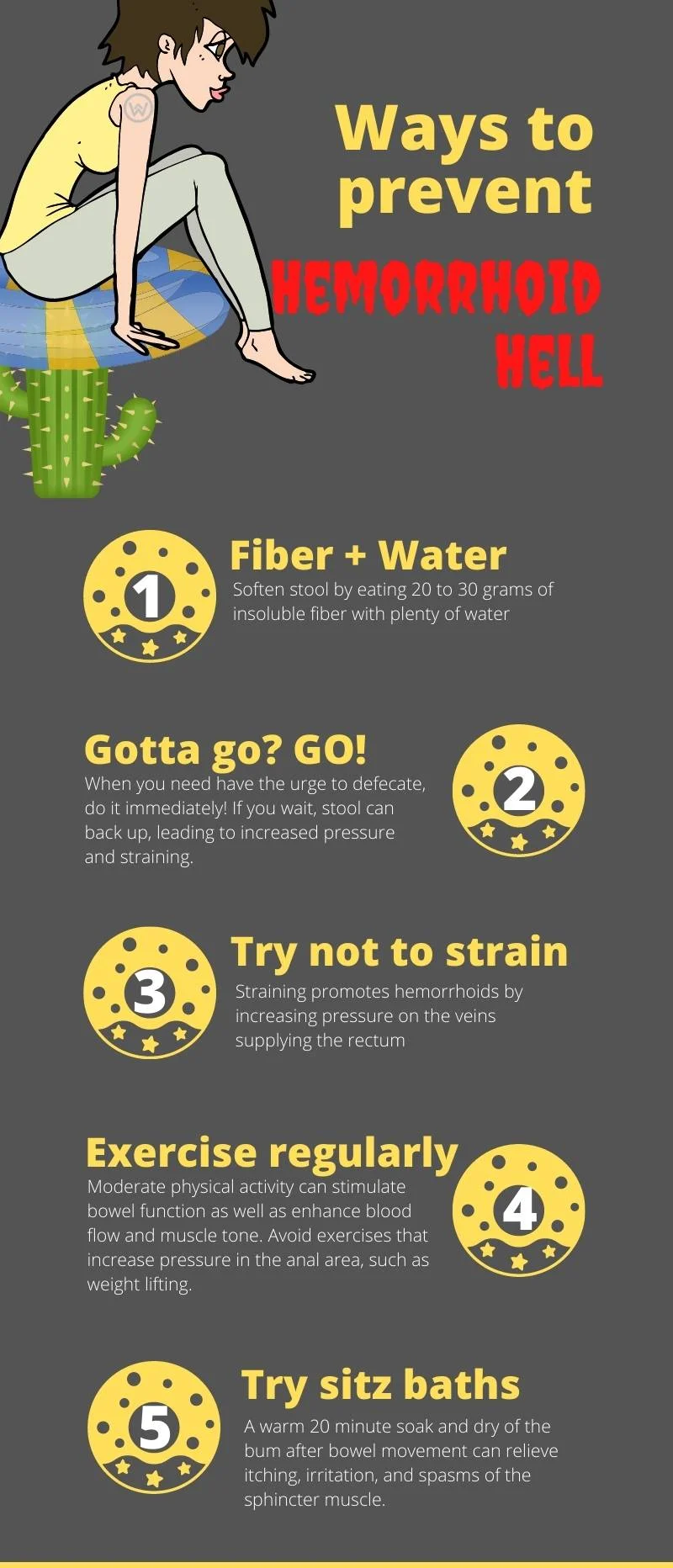
A diet rich in fiber (about 20-30g per day) is fundamental for preventing constipation, a leading cause of hemorrhoids. Include plenty of fruits, vegetables, whole grains, and legumes in your meals to soften stools and promote regular bowel movements.
2. Stay Hydrated:
Adequate hydration (about 64oz) ensures soft stools, making them easier to pass. Aim to drink plenty of water throughout the day to maintain proper hydration levels and support healthy digestion.
3. Practice Good Bowel Habits:
Establishing a regular bathroom routine (of less than 5 mins) can help regulate bowel movements, preventing constipation and minimizing strain on the rectal area. Avoid delaying, holding, straining, or trying to hurry bowel movements when the urge arises.
4. Exercise Regularly:
Physical activity promotes better digestion and regular bowel movements. Incorporate regular exercise into your routine to improve overall health and reduce the risk of developing hemorrhoids.
5. Avoid Prolonged Sitting or Standing:
Extended periods of sitting or standing can put pressure on the rectal area, increasing the risk of developing hemorrhoids. Take breaks and move around periodically to alleviate pressure and improve circulation. Ideally, pumping the legs every hour such as walking, squats or marching in place.
6. Proper Toilet Habits:
Avoid straining during bowel movements, as it can lead to hemorrhoids. Use a footstool to elevate your feet while on the toilet, which can help achieve a more natural position and reduce strain.
7. Maintain Proper Hygiene:
Keep the anal area clean and dry after bowel movements. Use gentle, unscented, moistened toilet paper or wet wipes and pat the area dry rather than rubbing, which can aggravate hemorrhoids. Bidet style toilet seats can be very useful & affordable.
8. Lift Properly:
When lifting heavy objects, use proper lifting techniques to avoid straining. Excessive straining while lifting can increase pressure on the rectal area and contribute to hemorrhoid development.
9. Manage Weight:
Maintain a healthy weight to reduce the risk of developing hemorrhoids. Excess weight can exert pressure on the rectal area, contributing to their formation.
10. Avoid Irritants:
Avoid using harsh soaps, perfumed products, or alcohol-based wipes in the anal area, as these can irritate and exacerbate hemorrhoids. Over aggressive wiping or using too much soap too often can break down the tissue. Also be careful of hidden alcohol in astringent cleansers such as witch hazel.
Prevention & Treatment
-
Fiber-Rich Diet: Consuming a diet high in fiber helps in preventing constipation and straining during bowel movements, which can exacerbate hemorrhoids.
-
Hydration: Drinking an adequate amount of water can soften stools, making them easier to pass and reducing the strain on hemorrhoids.
-
Good Toilet Habits: Avoiding prolonged sitting on the toilet, using soft toilet paper, and practicing proper hygiene can help alleviate symptoms.
-
Over-the-Counter Treatments: Over-the-counter creams, ointments, or suppositories may provide relief from symptoms like itching, pain, and swelling.
-
Medical Procedures: In severe cases, medical procedures such as rubber band ligation, sclerotherapy, or non-surgical removal might be necessary to treat hemorrhoids.
When to Seek Medical Advice
By adopting these preventive measures and incorporating them into your daily routine, you can significantly lower the risk of developing hemorrhoids. However, if you experience persistent symptoms such as bleeding, pain, or itching in the anal area, it’s essential to schedule a consultation with Dr. Scott Woody at Mountain Streams Medical Center, PC. Following these preventive steps not only minimizes the likelihood of hemorrhoids but also promotes overall digestive health and well-being.
DISCLAIMER: The Site cannot and does not contain medical/health advice. The medical/health information is provided for general informational and educational purposes only and is not a substitute for professional advice.